
History
Carmel-by-the-Sea: How an Artists' Colony Wrote Its Own Rules
If you've ever tried to find a house in Carmel-by-the-Sea, you know the town does things its own way. Until this fall, homes here didn't have street addresses. Locals gave directions like "Santa Rita, 3 southwest of 4th." There are no streetlights in the residential neighborhoods, no sidewalks outside downtown, and the roads bend around trees instead of the other way around.
None of that is an accident. Most of what makes Carmel feel different today goes back to a handful of decisions the town made in its first few decades.
Before the village
Long before Carmel was a town, this was Rumsen Ohlone land. In 1771, Father Junípero Serra moved Mission San Carlos Borromeo from Monterey to the mouth of the Carmel River, where it still stands just outside today's city limits.
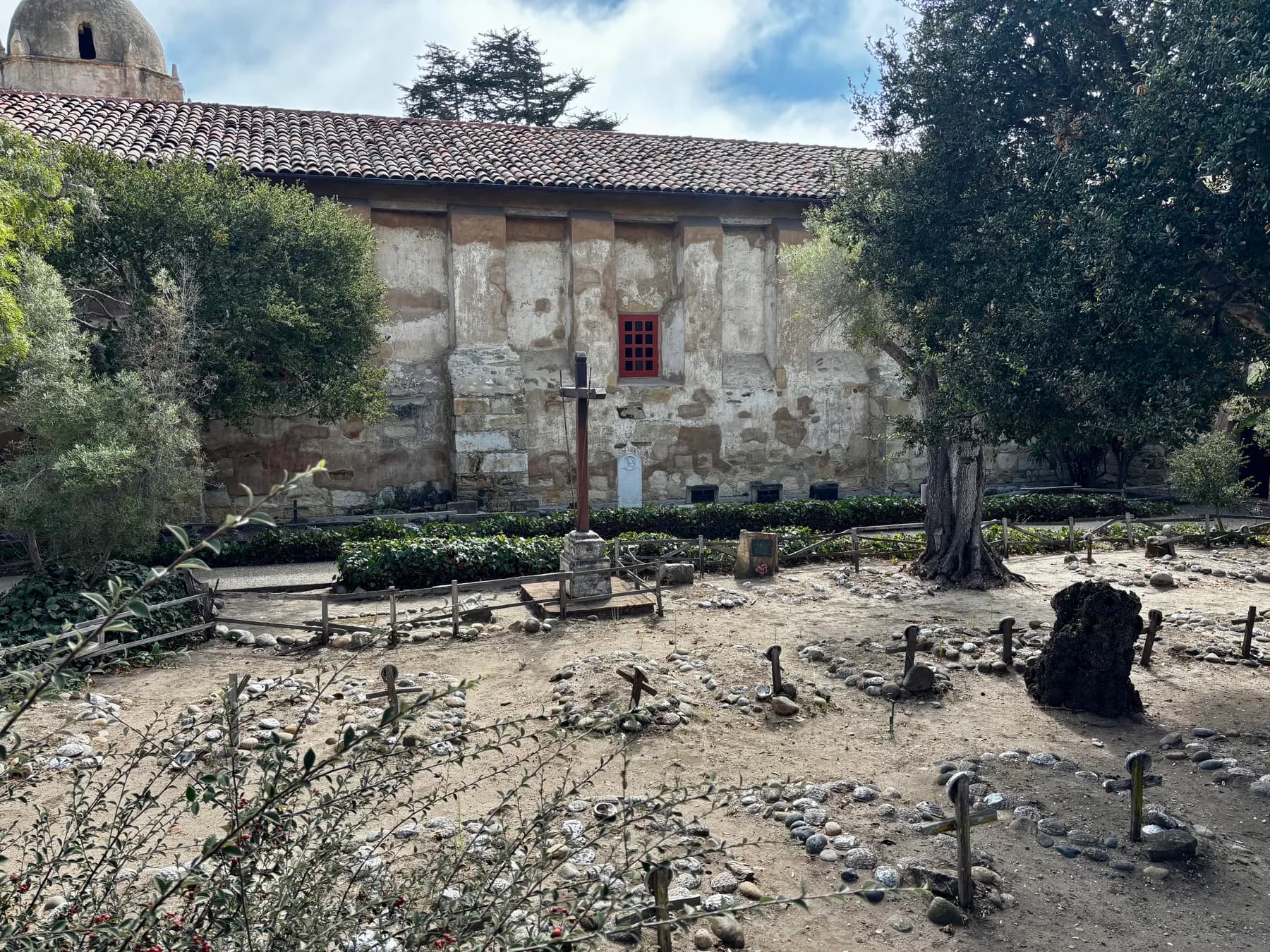
The first attempt at a town came in 1888, when Santiago Duckworth and Honoré Escolle filed a subdivision map. Duckworth hoped to build a Catholic summer resort, and he started selling lots. It never became the resort he had in mind, and much of the land was still unsold when the next developers came along with a different idea.
A town built for artists
In 1902, Frank Devendorf and Frank Powers formed the Carmel Development Company and bought up the unsold land. Devendorf was a businessman with a love of land development, and Powers was an attorney. Devendorf would spend the next 30 years building Carmel into a community of painters, writers, and musicians.
They made buying in easy. Lots sold for around $500, secured with a $5 or $10 deposit. Devendorf loved trees and had a row of pines planted down the middle of Ocean Avenue, the town's main street. Builder Michael J. Murphy put up a large share of the early homes, nearly 350 buildings between 1902 and 1940.
Then came the 1906 San Francisco earthquake. Artists, writers, and musicians left the damaged city, and many of them landed in Carmel. Poet George Sterling and writer Mary Austin were among the early names that gave the village its reputation. Austin is credited with the idea for the Forest Theater, an outdoor stage that opened in 1910 and is still in use today.
Keeping Carmel off the map
Carmel incorporated as a city in 1916, and its early leaders were protective of what they had. The village decided against sidewalks in the residential areas, against streetlights, and against commercial development on the beach, and it set out to protect the native trees.
In the 1920s, the city went further. It formally declared itself "primarily, essentially and predominantly" a residential community, with business taking a back seat. That language is still in the city's zoning code today. Around the same time, Perry Newberry, one of the town's leaders, campaigned on the slogan "Keep Carmel Off the Map."
In other words, Carmel was gatekeeping itself. It's a little like finding a great band nobody's heard of and hoping it stays that way, because you know what happens when it gets big. The people who loved Carmel didn't want it to change, so they wrote rules to keep it from changing.
The lack of street addresses came out of that same attitude. Instead of home mail delivery, which some residents felt would make the village feel too much like a city, everyone picked up their mail at the downtown post office. Many homes were known by name instead of number, and the trip to the post office became part of daily life.
The fairy tale cottages
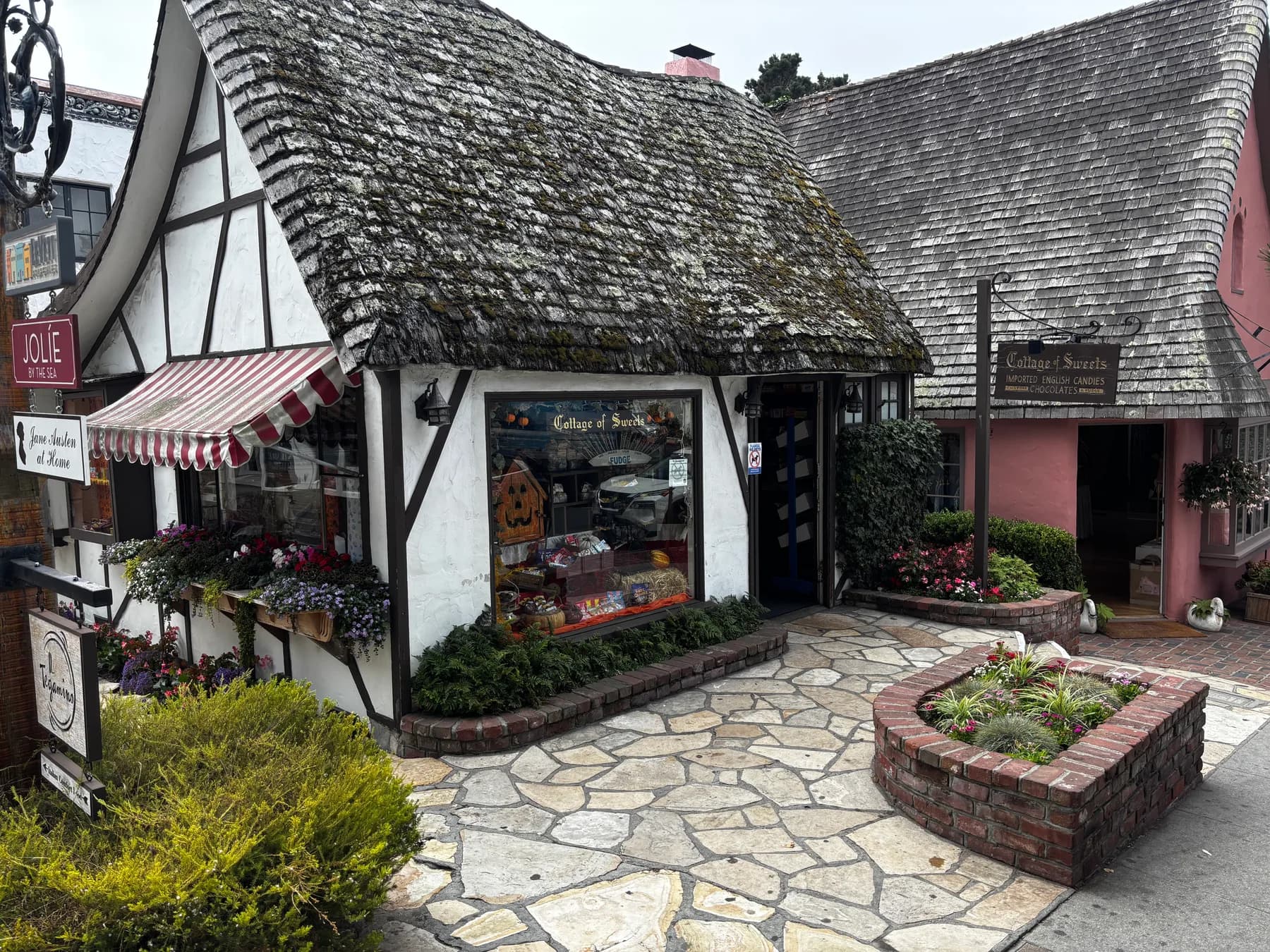
The storybook cottages that show up on so many postcards started almost by accident. In 1924, Hugh Comstock was visiting Carmel when his wife, Mayotta, asked him to build a small place to display her handmade "Otsy-Totsy" dolls. He built a tiny cottage with a steep roof, a "fairy house in the woods," and named it "Hansel." It served as Mayotta's doll showroom and workspace.
The dolls kept coming, and eventually Mayotta needed more room. Comstock built a second cottage next door to hold and display them, and named it "Gretel." Today, Hansel and Gretel still stand side by side, and they're some of the most photographed homes in town. A few years ago, I was filming outside for my YouTube video on the cottages and ended up having a quick chat with the owner. They're even more charming up close.
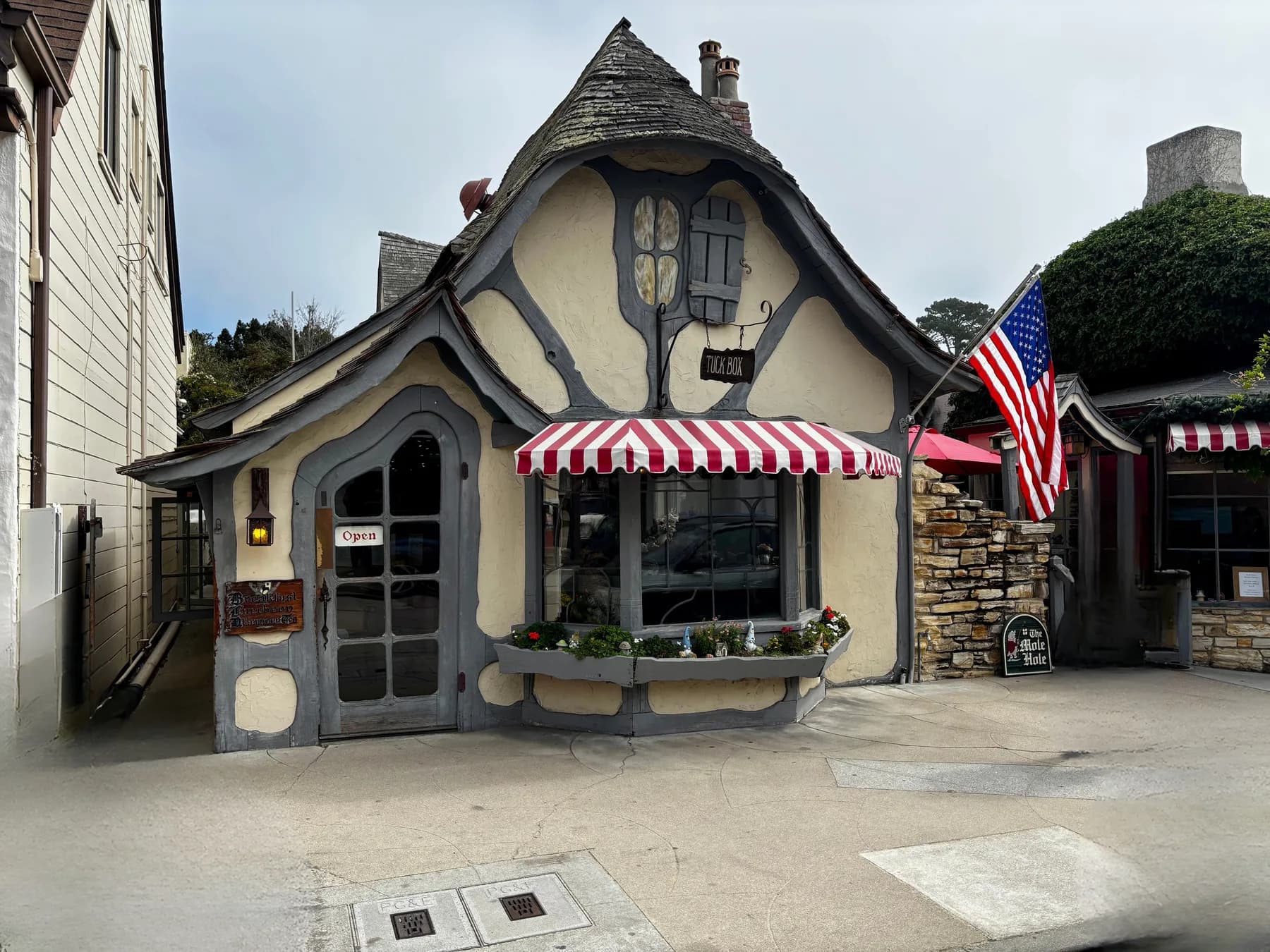
People loved what Comstock was building. Comstock went on to design and build many more cottages around town, with steep gables, half-timbering, and diamond-paned windows. Many of them are still standing, including the Tuck Box on Dolores Street, built in 1927. Comstock later served on the city's planning commission, so he helped shape the look of Carmel in more ways than one.
A town that still makes its own rules
Carmel's quirks have kept coming. In 1963, the city passed an ordinance requiring a permit to wear high heels over 2 inches tall. The idea was to protect the city from lawsuits, since tree roots buckle the pavement. The permits are free at City Hall.
For years, Carmel also restricted the sale of fast food, including ice cream cones, which meant you couldn't easily grab a cone and walk around town. Of all people, it was Clint Eastwood who changed that. After he was elected mayor in 1986, he pushed to overturn what became known as the "ice cream cone law." He served one term.
The newest change is the biggest in a long time. In June 2026, the City Council unanimously approved a street address map, and numbers started going up on homes this fall. The main reason was practical. Ambulances had trouble finding homes, and more residents now rely on home deliveries for things like prescriptions. As Mayor Dale Byrne put it, "This is 2026, not 1906."
What it means if you're buying or selling in Carmel
There's some irony in Carmel's story. It started as a place where artists and writers of modest means could buy a lot for a few dollars down. Today it's one of the most expensive places to buy on the Peninsula, and the Golden Rectangle, near the beach, is among the priciest neighborhoods anywhere around here.
What people are paying for is what Carmel is: the charm, the walkability, the village feel, and a history no other town can copy. When you buy here, you're buying into all of that, including the rules that protect it.
The same history that gives Carmel its charm also shapes how homes here are bought, sold, and changed:
- Design and historic review. Carmel reviews changes to homes closely, and many older homes are on the city's historic inventory. That can affect what you're able to remodel or rebuild.
- Trees. The town's early commitment to its forest is still in the rules. Removing or significantly trimming many trees requires city approval.
- Small lots and older homes. Many homes sit on small original lots, close to their neighbors. That's part of the village feel, and it affects things like parking, additions, and outdoor space.
- Short-term rentals. Short-term rentals aren't allowed in Carmel's single-family zone.
If you're looking at a home in Carmel, it's worth knowing these rules before you fall in love with a remodel plan. The Buyer's Guide chapter on local rules covers them in more detail.
Sources: Wikipedia's Carmel-by-the-Sea and Carmel timeline articles; Wikipedia on James Franklin Devendorf and Santiago J. Duckworth; Monterey County LocalWiki on Hugh W. Comstock and the Carmel Development Company; Tales from Carmel; Wikipedia on the political life of Clint Eastwood; the Tor House Foundation; the City of Carmel-by-the-Sea Municipal Code, Chapter 17.02, and Historic Context Statement; GV Wire (October 2, 2026); and CarmelCalifornia.com.
Sources
- Wikipedia, Carmel-by-the-Sea, California, and Timeline of Carmel-by-the-Sea, California
- Monterey County LocalWiki, Hugh W. Comstock and Carmel Development Company
- Tales from Carmel, The Floorplan for Hansel (December 2011)
- Wikipedia, Political life of Clint Eastwood
- Wikipedia, James Franklin Devendorf and Santiago J. Duckworth
- Tor House Foundation, Carmel-by-the-Sea in 1925: The Year Everything Changed (October 2025)
- City of Carmel-by-the-Sea Municipal Code, Chapter 17.02 (Title, Components and Purposes)
- City of Carmel-by-the-Sea, Historic Context Statement (updated 2008)
- GV Wire, After 110 Years, a California Coastal Village Yields to Street Numbers (October 2, 2026)
- CarmelCalifornia.com, Fun Facts About Carmel