
Seller's Guide
Chapter 3 of 9
Pricing your home in Monterey County
Last checked: September 2026. Every home and every market is different. This chapter explains how pricing generally works here, but the right price for your home comes from a close look at your home and what's selling around it right now.
Pricing is one of the biggest decisions you'll make when you sell. It affects how many buyers see your home, how fast it sells, what kind of offers come in, and in the end, what you walk away with.
It's also where a lot of sellers get stuck. You may have a number in your head from a neighbor's sale, an online estimate, or what you'd need to buy your next home. This chapter walks through how the price actually gets set, and why it's worth getting right from the start.
How I price a home
When I work with sellers, I don't hand you a number on day one. Our team uses a two-step process:
- First, I come see the home. I walk through it with you, and I learn about your situation: your timing, your plans, what you've updated, and anything that isn't obvious from the outside. I also bring a packet of information about the selling process, so you have something to look through before we meet again.
- Then we meet again to go through the numbers. In between, I do my homework: comparable sales, what's on the market now, what didn't sell, and what's driving value on your street right now. When we meet, I walk you through a price range and what's behind it, so you can see how we got there. I also bring a net sheet, which shows the most important number: roughly how much you'll walk away with once everything is paid. Chapter 6 covers that in more detail.
You get a little homework in between, too. We give you a sheet to write down the 10 things you love most about your home. There's always something, big or small, that made you love it, and it often ends up in the marketing.
This is often called a comparative market analysis, or CMA. It's different from an appraisal, which is done by a licensed appraiser, usually for the buyer's lender.
Why it's a range, not a number
I give sellers a range of value, not a single exact number. No one can tell you the exact price a buyer will pay before the home is on the market. What a range does is show you where the home realistically fits, based on what similar homes have sold for.
Where you list within that range depends on your goals, the condition of the home, and what the market is doing. We'll talk through that together.
What drives value here
Monterey County has a lot of micro-markets. Two homes a few blocks apart can sell for very different prices, and comparing your home to the wrong sales is one of the most common pricing mistakes.
A few things that tend to make a real difference here:
- Location within the neighborhood. Views, being close to the water, a quiet street versus a busy one, and even which side of a highway or hill the home is on.
- Condition and updates. A remodeled kitchen and newer systems will usually sell for more than the same home in original condition. Buyers also look closely at big-ticket items like the roof, the sewer line, and the electrical.
- Permitted square footage and rooms. If a bedroom, bathroom, or addition was never permitted, it may not get full credit. An appraiser who notices unpermitted work has to comment on it and how it affects value. See Chapter 5 for more on unpermitted work.
- Fire zones and insurance. If a home is harder or more expensive to insure, some buyers will factor that in. See Chapter 7 of the Buyer's Guide for more on insurance.
- Lot, parking, and outdoor space. In areas with small lots, like Carmel or parts of Pacific Grove, a garage, off-street parking, or a usable yard can stand out.
This is why the first visit matters. We don't like to run the numbers blind and walk in with a price without knowing what shape the home is in or what makes it stand out. We want to know exactly what we're pricing before we price it. Seeing the home first lets us narrow the range down to something we're confident in.
Street by street
Here's an example of how local this can get. I was once holding an open house on Harvest Street in Maple Park, a desirable neighborhood in Salinas. The home was listed for around $700,000. A visitor from Los Angeles wanted to buy it, tear it down, and build something bigger to resell for around $1.6 million. His reasoning was that a home on Oak Street, just a few streets away in the same neighborhood, had sold for about that much.
The problem is that Oak Street is Oak Street, and Harvest is Harvest. Oak is one of the nicer streets in the neighborhood, with bigger homes that tend to sell for $900,000 to over $1 million. Harvest is a perfectly good street, but parts of it are closer to busier roads and apartments, and homes there don't sell at Oak Street prices. The exact same house would sell for less on Harvest, even though the two streets are only a few blocks apart.
That kind of difference doesn't show up in a spreadsheet. It comes from knowing the area. Even appraisers who don't regularly work an area can miss it.
Why online estimates miss
Sites like Zillow will give you an estimate of your home's value, but those estimates are based on algorithms that aren't reliable in our market. Homes here are very different from one another, even on the same street, and online estimates usually can't see the condition of the home, the view, the remodel, the unpermitted addition, or the busy road nearby. In my experience, they're rarely accurate, and when they're off, they're usually too high.
They do a little better in neighborhoods with a lot of similar homes and regular sales, like East Garrison, The Dunes in Marina, or Creekbridge in Salinas. Even there, I wouldn't depend on them. In most neighborhoods, they aren't reliable enough to use even as a rough estimate.
If you have an online estimate in mind, bring it up. We can talk through how it compares to what the sales show.
The appraisal still matters
If your buyer is getting a loan, their lender will order an appraisal. If the home appraises for less than the price in the contract, the buyer may ask you to lower the price, bring in more cash to make up the difference, or split it with you. If they have an appraisal contingency, they may be able to cancel.
Appraisers base their value on recent comparable sales. So even if a buyer is willing to pay well above what the sales support, the appraisal can bring the price back down. This is one more reason to price based on what the sales show.
The cost of overpricing
Overpricing is one of the most common mistakes sellers make, and it can cost more than people expect. Price is the biggest factor in whether a home sells or sits, especially in a market like this one, with higher interest rates and more uncertainty.
Here's what the numbers show. This year in Monterey County, homes that sold within their first 30 days sold for almost exactly their original asking price. The longer a home sat, the further below its original price it sold.
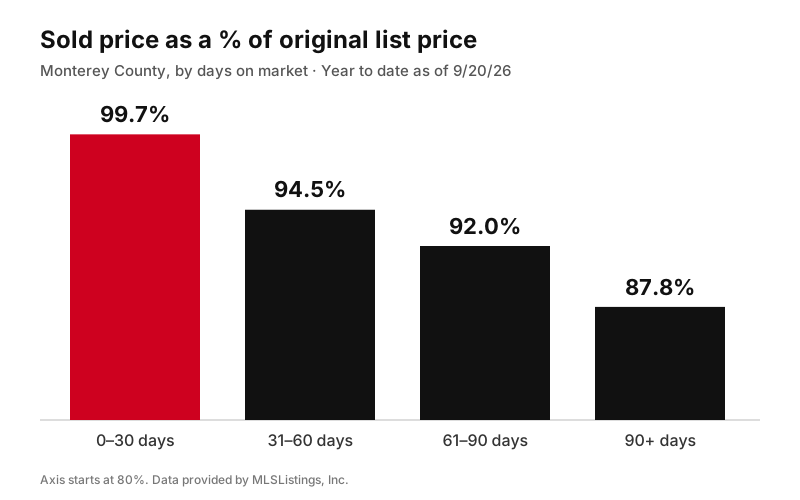
| Days on market | Sold price as a % of original list price |
|---|---|
| 0–30 | 99.7% |
| 31–60 | 94.5% |
| 61–90 | 92.0% |
| 90+ | 87.8% |
Monterey County, year to date as of September 20, 2026. Data provided by MLSListings, Inc. These numbers change over time.
On a $1,000,000 list price, the difference between selling in the first month and selling after 90 days is more than $100,000. And past a certain point, you may end up selling for less than the home was actually worth when you first listed it. Not only do you not get the price you wanted, you might not even get what the home was worth in the first place.
A few reasons this happens:
- The first few weeks matter most. That's when your home gets the most attention from buyers and agents who've been waiting for something new. If the price is too high, many of those buyers skip it.
- Time on the market shows. Buyers and their agents can see how long a home has been listed and every price change. A home that sits can start to look like something is wrong with it, even if nothing is.
- Price reductions can end up below where you'd have started. Chasing the market down often leads to a lower final price than pricing it right from the beginning.
- Overpriced homes help sell the competition. Buyers compare. A home priced too high can make the one down the street look like a better deal.
Pricing it right doesn't mean pricing it low. It means pricing it where buyers can see the value.
Pricing depends on the market you're in
How to price also depends on what the market is doing in your area. Different parts of the county can move at very different speeds. At times, Salinas has had multiple offers on well-priced homes. Carmel Valley, on the other hand, is one of the slowest markets in the county right now. As I write this, most homes there aren't selling for full asking price, and they're taking longer to sell than anywhere else in the county.
In a faster market, pricing at or slightly below value can bring in more buyers and sometimes more than one offer. In a slower market, a realistic price from day one matters even more, because there are fewer buyers to go around. We'll look at what's happening in your area when we set the price.
Timing and seasons
Seasons. Spring and summer are traditionally busier times to sell, with more buyers looking and families trying to move before the school year. When the market was moving very fast a few years ago, a lot of that seasonality disappeared. In the last couple of years, the market has become more balanced, and the usual seasons have come back. That said, homes sell here year-round, and fewer listings in the slower months can mean less competition. The best time to sell is usually when you're ready and the home is ready.
Military families. The Peninsula is home to the Defense Language Institute at the Presidio of Monterey and the Naval Postgraduate School, and many military families live in Seaside, Marina, and Monterey. Military moves usually come with orders and a set date. If you're a military family selling on orders, talk with your agent as early as you can, since your move date may not be flexible and pricing and timing will need to work around it.
Car Week. Every August, Monterey Car Week brings huge crowds to the Peninsula. It's great for the local economy, but it isn't a good week for selling. Pebble Beach is largely taken over by the car events, and getting in for a showing can be very difficult. Traffic across the Peninsula, including Carmel and Carmel Valley, can make any showing a challenge. Realistically, very little goes into escrow that week, especially in the higher-end areas. If your listing date falls around Car Week, we'll plan around it.
Holidays. The weeks around Thanksgiving and the end of the year are usually slower than summer. In my experience, the buyers who are out looking during the holidays tend to be more purposeful. They're giving up holiday time to look, so they usually aren't interested in overpriced homes. A realistic price matters even more then.
Adjusting the price after you list
Comparable sales tell us a lot, but in the end, buyers decide what a home is worth. Sometimes a home that looks well priced on paper doesn't get the response we expected. That can happen for reasons no one can see ahead of time, like a change in interest rates or a few new listings nearby.
If you're getting showings but no offers, or very few showings at all, the market is telling you something. We'll check in regularly on showings, feedback, and any new sales nearby, and decide together whether anything needs to change. The sooner we adjust, the less time the home spends sitting.
Where to focus your own research
- Before we list: Make a list of updates and repairs you've done, with rough dates. It helps more than you'd think.
- When you look at sales: Pay attention to the ones closest to your home in size, condition, and location, not just the highest price in the neighborhood.
- If you have a number in mind: Share it. It's helpful to know, and we can compare it to what the sales show.
If you're thinking about selling and want to know what your home might be worth, reach out. I'm happy to come take a look.
This is general information, not an appraisal or a guarantee of value. Home values depend on the property, the market, and many other factors, and they change over time. A comparative market analysis is not an appraisal.
Sources
- MLSListings, Inc., Monterey County sold price to original list price ratio by days on market, year to date as of September 20, 2026
- Fannie Mae Selling Guide B4-1.3-05, Improvements Section of the Appraisal Report (additions without permits)
- Monterey Car Week and Pebble Beach Concours d'Elegance, August 7-16, 2026 (PR Newswire, August 2026)
- See Monterey, Monterey Car Week event page: https://www.seemonterey.com/events/monterey-car-week/